Why You’re Delaying To Launch Your Online Business
In the current digital landscape, the barriers to entry for entrepreneurship have never been lower. Whether you dream of selling handmade goods, offering consulting services, or sharing your expertise through content, the tools and infrastructure are readily available. Yet, for every successful website that launches, hundreds of aspiring founders find themselves trapped in an endless cycle of preparation. They spend weeks, months, or even years researching marketing strategies, comparing web hosts, redesigning logos, and tweaking features—all without ever publishing anything substantial.
If you recognize this pattern, you are likely suffering from “analysis paralysis.” This is the psychological chokehold that occurs when the fear of making the wrong decision outweighs the desire to make any decision at all. It is the silent killer of innovation and the primary reason brilliant ideas never evolve into profitable projects. To successfully launch your online business and start generating real-world results, you must first understand and dismantle these internal psychological barriers. The good news is that the solution often lies not in achieving perfection, but in embracing simplicity and leveraging affordable, modern tools that minimize complexity and friction.
The Invisible Wall: Understanding Analysis Paralysiz
Analysis paralysis is more than simple procrastination; it is a defensive mechanism. Your brain convinces you that delay is productive, cloaking fear in the guise of thorough research or strategic planning. This mental wall ensures that your project never faces the scrutiny of the real world, thus protecting you from potential failure or criticism. By understanding the true nature of this delay, you can begin to systematically overcome it.
The Myth of the Perfect Plan
The internet is saturated with “ultimate guides” and step-by-step blueprints that promise guaranteed success. While these resources are valuable for orientation, they often feed the perfectionist trap. Aspiring entrepreneurs feel obligated to absorb every single piece of advice, believing that a flawless, 100-page business plan is a prerequisite for launching. This pursuit of the “perfect plan” is fundamentally flawed because an online business is a dynamic entity. Real-world feedback and iteration are infinitely more valuable than theoretical planning.
The reality is that your initial plan will be wrong. It will change the moment your first customer interacts with your product or reads your content. Successful founders spend 80% of their time acting and 20% planning; those stuck in paralysis spend 100% of their time planning for a scenario that will never materialize exactly as imagined.
How Fear of Failure Manifests as Planning
The deep-seated fear of failure is often the core driver of analysis paralysis. It manifests as over-planning in several ways: obsessive competitor research, endless redesigns of the landing page, or constantly changing the project’s scope. Every comparison, every revision, and every minor delay is a way to push the critical launch date further into the future. By maintaining a state of perpetual “almost ready,” you avoid the risk of public judgment, financial loss, or the simple disappointment that your initial effort wasn’t immediately successful. A crucial step toward overcoming this is separating your personal identity from your project’s outcome. Your worth as an individual is not tied to the success of your first iteration.
The Costs of Delaying Your Launch
The cost of delaying your online project is often invisible, yet it is profound. It’s not just the lost time; it’s the opportunity cost.
| Delay Cost Type | Description | Real-World Impact |
| Lost Momentum | The initial excitement and energy fade with prolonged inaction, making it harder to start later. | The project is abandoned or scaled down due to burnout. |
| Market Relevance | New competitors emerge, or market trends shift, making your meticulously planned idea obsolete. | Your idea is no longer novel when you finally launch. |
| Financial Opportunity | Every day you delay is a day you are not collecting data, building an audience, or earning revenue. | Zero revenue is generated, and crucial data for optimization is missed. |
| Confidence Erosion | The gap between what you intend to do and what you actually do widens, damaging self-trust. | You become convinced you are fundamentally unable to complete a task. |
The longer you wait, the greater the accumulated cost. The fastest way to mitigate these costs is not to plan better, but to start an online project today, in whatever small way you can.
Mindset Shift: From Perfectionist to Founder
The transition from an aspiring “wannapreneur” to an active founder requires a radical change in perspective. This shift involves redefining success, embracing imperfection, and focusing intensely on validated learning rather than theoretical knowledge.
Embracing the Minimum Viable Product (MVP) Approach
The concept of the Minimum Viable Product (MVP) is the single most powerful tool for shattering analysis paralysis. An MVP is not a half-finished product; it is the version of your project that allows you to collect the maximum amount of validated learning with the least amount of effort. For a service-based business, this might be a single landing page and a booking form. For a content site, it might be ten well-written, foundational articles.
The MVP is your launch target. It gives you a clear, achievable goal that is far less daunting than launching the “finished” enterprise. By committing only to the MVP, you instantly narrow the scope of your planning, forcing you to prioritize the absolute essentials needed to secure your first piece of feedback or generate your first dollar.
Deconstructing Imposter Syndrome
Imposter syndrome—the feeling that you are unqualified or a fraud—is rampant among new founders, particularly when setting out to create a blog or a knowledge-based service. This feeling thrives in isolation and is often rooted in the belief that experts possess some secret, innate knowledge. The antidote is to realize that expertise is earned through action, not acquired through research.
Every major entrepreneur launched something imperfect. Instead of asking, “Am I qualified to teach this?” ask, “Do I know more about this than my target audience?” The answer is almost always yes. By launching, you are giving yourself permission to become the expert in public, refining your knowledge and confidence with every piece of content you release.
Setting Tiny, Achievable Launch Goals
The psychological weight of a massive project is often enough to trigger paralysis. To combat this, adopt the “micro-launch” approach. Break your project down into sequential tasks that can be completed in an hour or less.
| Task Category | Large Goal (Paralyzing) | Tiny Goal (Actionable) |
| Website Setup | Launch the entire 15-page website. | Purchase domain and hosting. |
| Content Creation | Write the definitive 5,000-word guide. | Outline the introduction of the first article. |
| Marketing | Create a full social media marketing strategy. | Schedule a single announcement post. |
By successfully completing these tiny goals, you build “momentum capital”—a psychological reservoir of small wins that propels you toward the larger goal of launching.
Phase 1: Simplification—Cutting the Complexity
The most common mistake aspiring founders make is mistaking complexity for professionalism. True professionalism is often defined by simplicity and clarity. Phase 1 is about ruthlessly pruning unnecessary features, technologies, and costs that complicate the process of getting your project live.
Prioritizing Core Value Over Features
When developing a product or service, constantly ask: “What is the one thing my customer absolutely must get from this project?” If you are building a tool for email collection, the core value is capturing the email. If you are building an information site, the core value is delivering the answer to the user’s question. Everything else is a non-essential distraction for the initial launch.
This prioritization allows you to focus all your initial time, energy, and resources on perfecting that one core interaction. Complexity is the enemy of launch speed, and by simplifying your offering, you dramatically shorten your time-to-market.
Choosing Your Essential Tech Stack
The “how” of building your project is where many founders get stuck. They spend days comparing the merits of various Content Management Systems (CMS), website builders, and hosting providers. The best choice is often the simplest and most cost-effective one that allows you to focus on your content, not code.
For most small to medium-sized projects, a foundational, reliable, and affordable web host is the single most important technical decision. By choosing a provider that offers one-click installations for platforms like WordPress, a free domain (often included with annual plans), and necessary security features, you eliminate the most common technical hurdles. If you are ready to stop analyzing and secure the foundation for your project, you can start building your future by checking out tools that simplify the setup process here. Choosing a host that simplifies the technical process is often the final key to unlocking the launch button.
Defining the “Done” Moment
One of the most insidious forms of perfectionism is the inability to declare a project “done.” You must set a firm, measurable, and non-negotiable definition of a minimum launchable state. This state must be reached regardless of whether you feel “ready.”
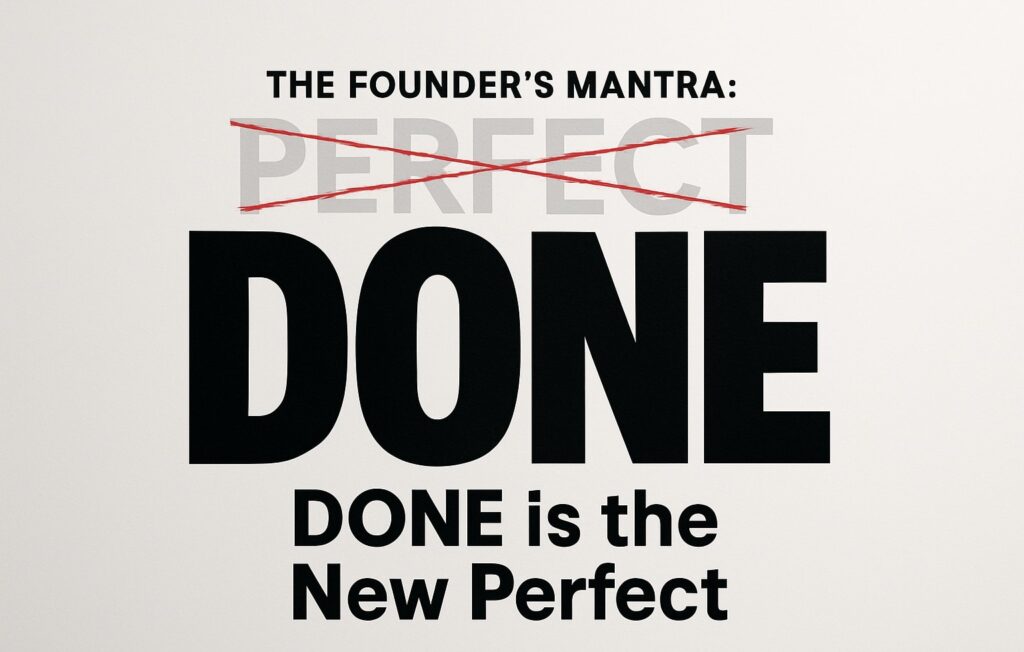
A clear “Done” criteria might include:
- The website is live on the domain name.
- The payment system (if applicable) is functional.
- Five core pieces of content are published.
- A basic contact or sign-up form is operational.
Once these criteria are met, the project is officially launched, and you move into the iteration phase. This hard line prevents the scope creep and feature bloat that keeps projects locked in development hell.
Phase 2: Actionable Steps to Launch Momentum
With the simplification mindset established, the next phase is purely operational. It is about generating immediate, measurable momentum to launch your online business and start collecting real-world data, which is far more valuable than any hypothetical scenario.
The 72-Hour Rule: Moving Past the Idea Stage
The “72-Hour Rule” states that if you have an important goal or task you want to achieve, you must take the first small, concrete step toward it within 72 hours, or your chance of achieving it drops to below 1%. This rule is incredibly effective for combating the post-planning slump.

If you have completed the planning phase, your 72-hour launch goal should be small but decisive, such as installing your CMS or publishing your first piece of raw, unedited content. The point is not perfection; the point is speed and the breaking of inertia. Successful entrepreneurs are masters of starting, even if they are imperfect finishers.
The Importance of Early Feedback
Paralysis is often fueled by the belief that your project must be flawless before anyone sees it. This is antithetical to rapid growth. Early feedback, especially critical feedback, is a gift. It tells you exactly where to focus your effort and prevents you from spending weeks developing a feature nobody wants or needs.
Launch your MVP to a small, trusted circle of beta users, peers, or friends. Their early, honest input will guide your first few weeks of post-launch iteration. Do not view criticism as a failure; view it as free consulting that provides the roadmap for the next, better version of your project.
Documenting Your Process, Not Just Your Product
As a new digital startup, you are generating tremendous amounts of internal knowledge. Documenting your process—the challenges you faced, the tools you chose, and the decisions you made—serves two critical functions. First, it acts as a valuable record for future employees or partners. Second, it can form the foundation of your initial content strategy. Transparency about the difficulties of launching often resonates strongly with an audience and builds authority. This also helps combat imposter syndrome, as you see concrete evidence of your expertise being built.
Overcoming Technical Intimidation with Affordable Tools
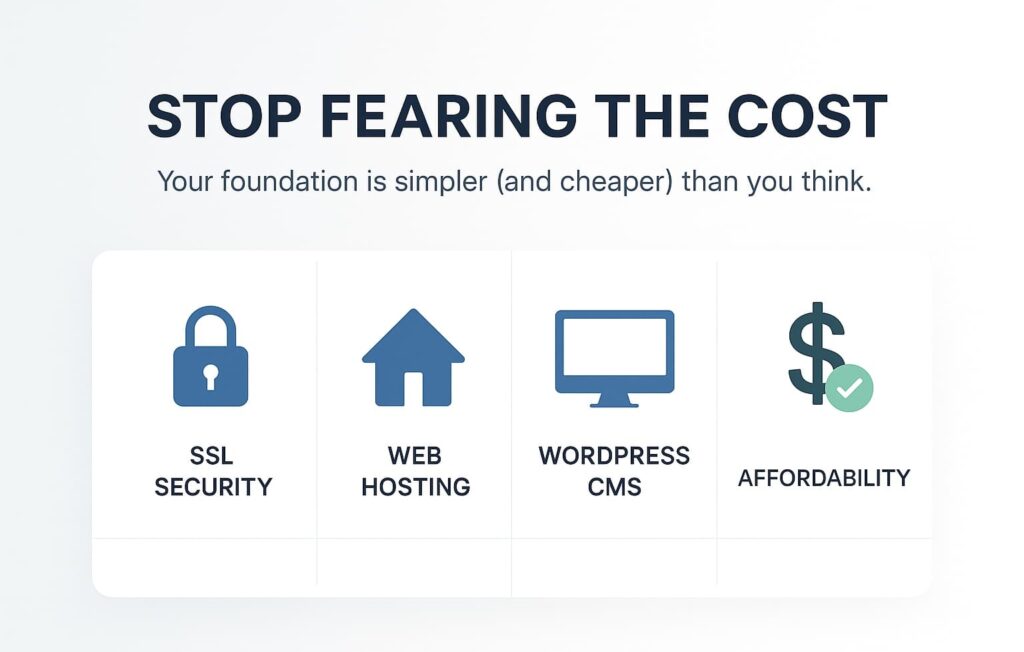
Many founders treat the technical aspects of an online project—like web hosting, domains, and security—as mystical, complex hurdles. In reality, thanks to modern, streamlined services, these steps are often the easiest and fastest part of the launch process, provided you know where to look. By simplifying the tech stack, you remove a major source of anxiety and expedite the final step to launch your online business.
The Role of Affordable Web Hosting in Reducing Friction
A stable, fast, and secure foundation is non-negotiable for any online project. Historically, this required complex server management. Today, affordable shared hosting plans are specifically engineered to handle the needs of a small business or new content site without requiring any technical expertise.
The selection of a web host often comes down to balancing performance and budget. Fortunately, many services now offer highly competitive introductory rates. This is a topic worth exploring in detail, especially to understand what costs you can anticipate and minimize when securing your digital presence. For a comprehensive look at the breakdown of expected expenses, you should consult our guide on how much is domain and hosting. Understanding the minimal financial commitment required can often break the cost-related component of analysis paralysis.
Getting Your Core Content Ready
Once the foundational technical steps are complete (domain registered, hosting active, CMS installed), the next immediate step is content. Your core content (e.g., “About Us,” “Services/Products,” and the first few cornerstone articles) needs to be compelling, authoritative, and helpful.
If your core goal is to create a blog, you must ensure your first articles solve a specific user problem. Avoid broad, unfocused posts. Instead, aim for utility and clarity. The focus should be on practical information delivery, not on stylistic perfection. You can always refine the style later, but the information must be correct and present from day one. To help you structure your work and guarantee you don’t miss any critical steps, we strongly recommend reviewing our comprehensive guide on how to start a website from scratch. This guide provides a valuable checklist to ensure your site is technically sound before launch.
Securing Your Platform from Day One
Security is not a feature you add later; it is a core requirement for a professional launch. At a minimum, your platform must have an SSL certificate. This certificate encrypts the connection between the user’s browser and your website, making the connection secure (which is also essential for SEO and displaying the padlock icon in the browser).
Modern hosting solutions often include free SSL certificates automatically installed with your hosting package. Beyond SSL, ensure your CMS (like WordPress) is immediately updated, and you use strong, unique passwords. Taking these basic security steps early on instills confidence in your audience and prevents devastating issues that can derail a project immediately after launch.
Conclusion: The Power of Done Over Perfect
The online world rewards action. Your project does not need to be perfect to launch; it needs to be launched to become perfect. Analysis paralysis is a self-imposed obstacle that prevents you from entering the market and gathering the crucial data necessary for true refinement and success. By adopting a Minimum Viable Product (MVP) mindset, simplifying your technical stack, and focusing on tiny, measurable steps, you can break free from the cycle of delay.
Remember, the greatest risk to your ambition is not failure; it is waiting until the opportunity has passed. The time you spend comparing a hundred different options could be spent serving your first customer, publishing your tenth piece of content, or generating your first dollar. Take that deep breath, secure the affordable tools you need today, and make the decisive move to launch. The world is waiting for your project.
Frequently Asked Questions (FAQ)
What is the difference between analysis paralysis and procrastination?
Analysis paralysis is a specific type of procrastination where the delay is caused by overthinking or over-researching a complex task. The individual feels productive because they are actively planning or comparing options, but no physical action is taken toward the final goal. Procrastination is a broader term for delaying any task, often due to low motivation or avoidance. Analysis paralysis is the active yet non-productive pursuit of perfection.
How long should my online project’s MVP phase last?
The MVP (Minimum Viable Product) phase should be short and focused. Ideally, the initial MVP should be launched within 4 to 12 weeks from the start of the project, depending on complexity. The goal is to move out of the planning room and into the feedback loop as quickly as possible. The longer the MVP phase, the higher the risk of analysis paralysis creeping back in.
Is it necessary to have a large advertising budget before I launch my website?
Absolutely not. For an initial launch, an advertising budget is unnecessary and often counterproductive. You should focus on organic growth and validated learning first. This means relying on Search Engine Optimization (SEO), direct outreach, and using social media for initial exposure. An advertising budget is best reserved for scaling a project after you have proven the business model works and have identified which content or product converts best.
What is the single most important factor for a successful launch?
Momentum. The single most important factor is the speed and consistency with which you move from ideation to execution. A quick, imperfect launch followed by rapid iteration (learning and improving) will almost always beat a slow, heavily polished launch. Focus on shipping and improving in public.
Citations, Sources
- Google’s E-E-A-T (Experience, Expertise, Authoritativeness, Trustworthiness) Guidelines for Content Quality
- Principles of the Lean Startup Methodology (MVP, validated learning)
- Data on Opportunity Cost in Small Business Economics
- Standard Web Development and Hosting Best Practices